Glasses Frame Measurements: A Canadian Sizing Guide
Read glasses frame measurements in millimetres, compare real frame sizes and build a better fit shortlist when browsing eyewear in Canada and BC.
6 min read · Published October 16, 2026
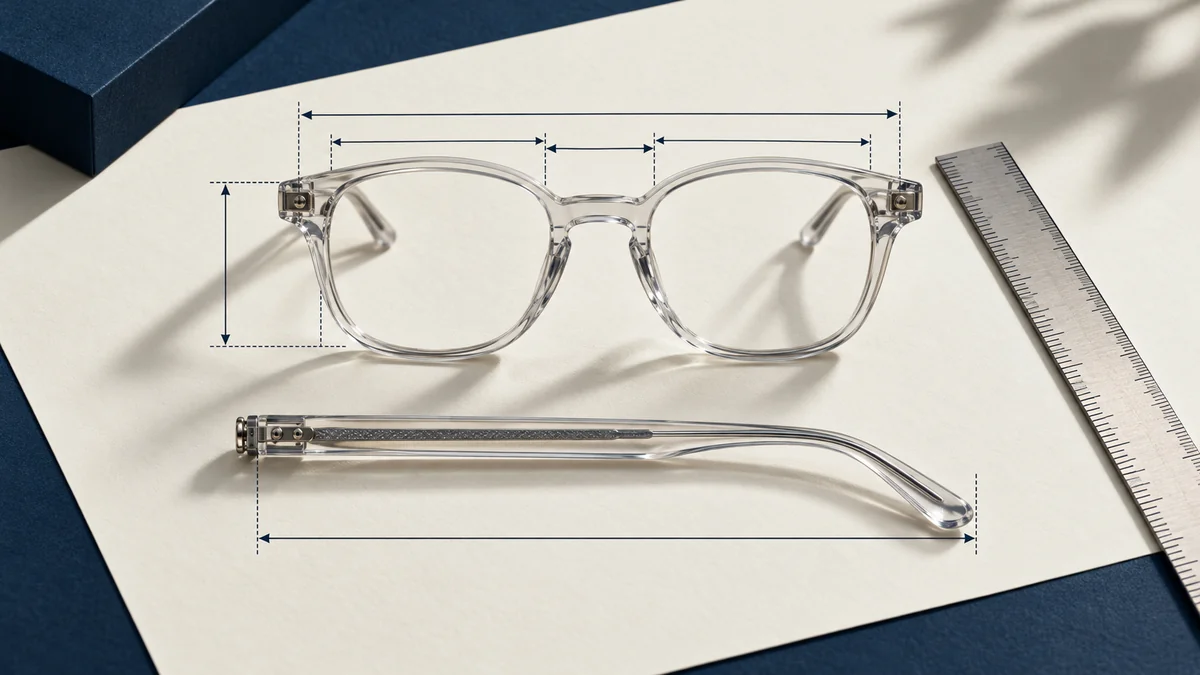
Eyeglass frame measurements usually appear as three numbers, such as 52□18-145. They describe lens width, bridge width and temple length in millimetres. Use them to narrow your choices, then check the frame's full width, bridge shape and how it sits on your face.
For Canadians comparing glasses online, those numbers make a better starting point than a size label alone. A frame called medium by one brand may have different dimensions from another brand's medium. Once you have a sensible size shortlist, our guide to clear, black and tortoiseshell frames can help with the style decision.
What do the three numbers on glasses mean?
The sequence follows the same basic order even when the punctuation changes. You might see a small square, a space or a dash between the figures. Warby Parker's measurement guide explains the three dimensions this way:
| Marking | What it describes | What to compare |
|---|---|---|
| 52 | Width of one lens opening, in mm | The listed lens width of another frame |
| 18 | Bridge width between the lens openings, in mm | Bridge width and the shape of the nose support |
| 145 | Length of the temple arm, in mm | Arm length and where the bend sits behind your ear |
The first number is not the width of the whole frame. The second is not your pupillary distance. The third does not tell you how wide the arms sit when the glasses are open.
Think of the marking as a set of useful dimensions rather than a fit guarantee. It tells you where to begin comparing, while photographs and a fitting check answer different questions.
Start with a pair that already fits comfortably
Take out a pair you wear comfortably through a normal day. Look inside each temple arm and, if needed, around the bridge for the size marking. Write it down alongside the manufacturer and style name so you do not mistake a model code for a measurement.
Next, note what you actually like about that pair. Does the bridge stay in place? Do the arms feel comfortable behind your ears? Does the lower rim stay clear of your cheeks when you smile?
If the pair has become bent or loose, record that too. Copying its size can still be useful, but copying its current fit problems will not help you choose the next pair. A damaged frame is a poor reference for what comfortable alignment should look like.
Make a short comparison note on your phone:
- Current frame and size marking.
- What feels comfortable about the fit.
- Any pressure, slipping or cheek contact you want to change.
- Any missing measurement you need to ask about.
That note is more useful than remembering that your last glasses were simply small or large.
Compare real examples without guessing the fit
Two catalogue examples show why one measurement cannot tell the whole story. The XEYE QM33301 lists 49□24-145, while the XEYE RTA2607 lists 55□17-145. These specifications were checked on 15 October 2026.
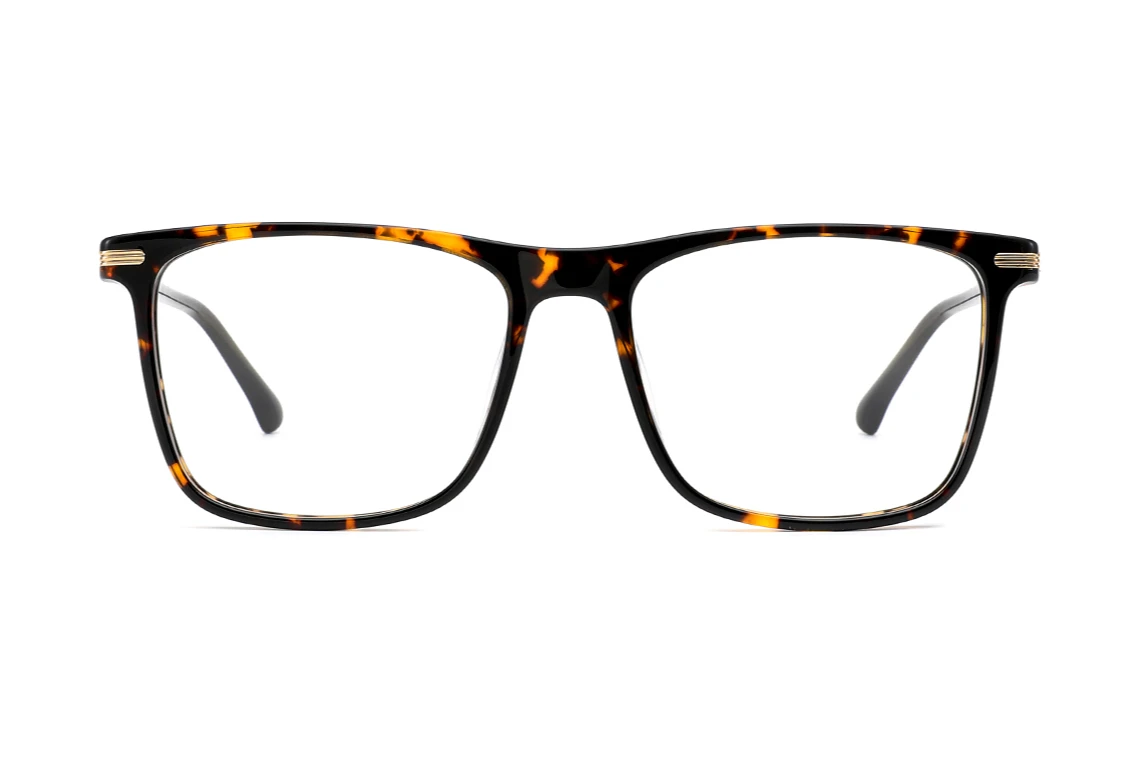
The RTA2607 has a lens opening 6 mm wider than the QM33301. Its bridge measurement is 7 mm smaller, while both list a 145 mm temple length. Those differences do not, by themselves, prove which will feel better on your face.
You may be tempted to calculate total width by adding two lens widths and the bridge. For these examples, that gives 49 + 24 + 49 = 122 mm and 55 + 17 + 55 = 127 mm. These sums leave out the outer rims and endpieces, so they are not the finished frame widths.
The RTA2607's product record separately lists a 147 mm total width. The QM33301 record does not provide a total width, so we leave that value unknown. This is a useful browsing habit: distinguish a published dimension from a number you have calculated for another purpose.
Check the bridge shape as well as its width
A bridge number describes a dimension, not the full shape of the surfaces resting on your nose. Look at front and angled photographs to see how the bridge and nose supports are built. If the photographs leave that unclear, ask for a closer view rather than guessing from the size marking.
Two frames with the same bridge number can look quite different in this area. One may have separate nose pads; another may have a shaped bridge built into the front. Whether either suits you needs a fitting assessment, especially if your current glasses repeatedly slip or press in one spot.
The Canadian Association of Optometrists' frame-selection training treats nose angles, temple fit, frame wrap and other fitting details as separate considerations. Matching three printed numbers therefore cannot replace checking the frame on the wearer.
Look beyond the front photograph
The straight-on image helps you compare the outline. An angled view helps you see rim thickness, hinge position and how the temples join the front. A side view shows details that may disappear in a small product-card image.
Keep the views consistent when comparing two frames. A close-up of one pair and a distant photograph of another can create a false impression of relative size. Use the listed dimensions to check what the images seem to suggest.
Material is another separate choice. A slim-looking front and a broad acetate front may create different visual effects even when their size markings are similar. Our frame-material comparison explains what the catalogue labels can and cannot tell you.
Keep frame measurements separate from prescription measurements
Frame measurements describe the frame. Pupillary distance, often shortened to PD, describes the spacing of the pupils and is used when positioning prescription lenses. The number printed beside the square symbol on a temple arm is not a substitute for PD.
If you are choosing prescription glasses in BC, bring the specific frame dimensions and your prescription questions to an eye-care professional. Ask them to confirm the frame and lens combination, including any measurements needed for the lenses you intend to use.
Avoid treating an online frame shortlist as approval for a particular lens design. ZEISS's guide to matching frames and lenses explains why lens choice and frame choice need to work together. This guide covers frame comparison, not prescription interpretation.
A practical size checklist for Canadian shoppers
Before saving a frame to your shortlist, work through these checks:
- Record your reference pair. Use glasses that fit comfortably, with any existing fit problems noted separately.
- Compare all three figures. Do not select a frame from lens width alone.
- Look for total width and lens height. Treat missing fields as questions, not permission to estimate.
- Inspect the bridge and side views. Numbers do not show every contact point.
- Confirm the prescription fit separately. Ask about the actual frame and intended lenses.
Whether you browse from Burnaby, Vancouver, Victoria or elsewhere in Canada, the comparison method stays the same. Location does not change what the millimetres mean; it affects where you arrange the fitting help you need.
You can use the frame catalogue to compare published specifications, then keep a shortlist with the size marking, product link and any unanswered questions. The aim is a clear comparison you can explain, rather than a size guess you hope will work.
Prepared by GRAEL editorial. We compared the published product dimensions and calculated the examples on 15 October 2026. The cover is an AI-generated conceptual illustration; the product photograph shows the named frame. General fitting information draws on the sources linked above.
Questions
- Does 52-18-145 describe the full width of glasses?
- No. It describes one lens opening, the bridge width and the temple length, in that order. Look for a separately listed total frame width.
- Can I use my old glasses size to choose a new pair?
- Use a comfortable pair as a comparison point. Also compare the bridge shape, full width and fitting details; matching the three numbers does not guarantee the same fit.
- Is bridge width the same as pupillary distance?
- No. Bridge width is a frame dimension. Pupillary distance is a wearer measurement used for positioning prescription lenses.